Democrats to target funding for Trump's D.C. construction
With a new congressional majority, House leaders plan to use appropriations bills and oversight hearings to challenge federal spending on the White House ballroom and other projects.
By Nathaniel Hayes ·
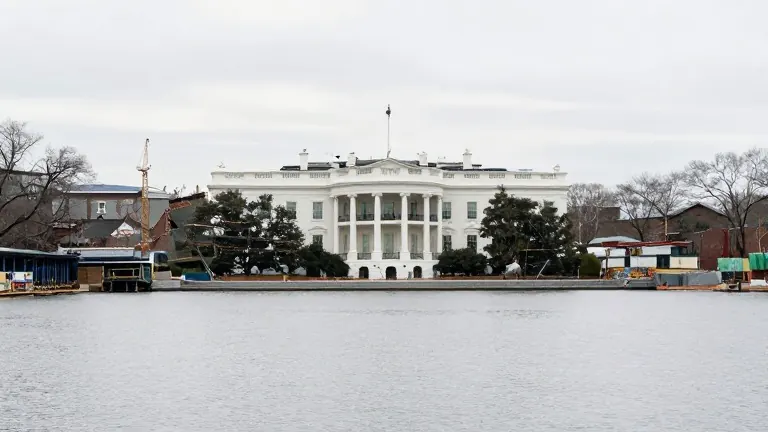
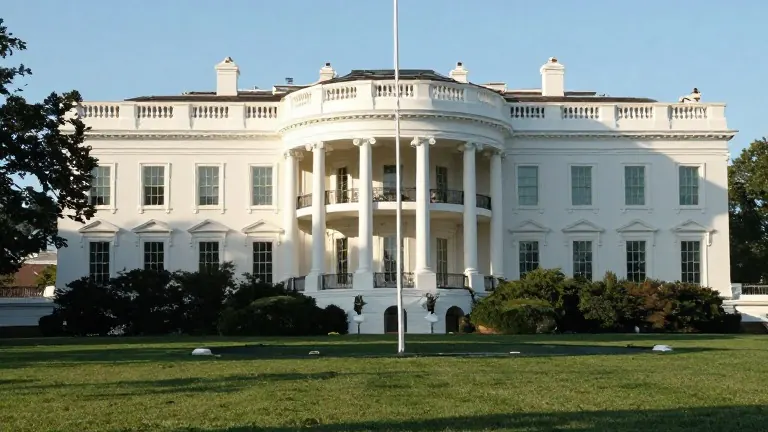
President Donald Trump's second term has been defined by a series of major construction projects in the Washington, D.C., area, including a new White House ballroom and a proposed triumphal arch. These initiatives have continued at a rapid pace despite the Democratic Party's victory in the recent midterm elections. As the new congressional session approaches, Democratic leaders are preparing to use their increased legislative power to challenge the administration's use of federal funds.
The administration has pursued these changes through executive orders and by staffing regulatory commissions with loyalists, often bypassing Congress. Projects such as the demolition of the East Wing of the White House and the clearing of trees at East Potomac Park have already altered the physical landscape of the capital. Trump declared the renovated Oval Office a national monument in an executive order, aiming to protect the space from future changes. Critics argue that this unilateral approach violates federal laws governing public lands and construction.
Rep. Jared Huffman, D-Calif., who will lead the House Natural Resources Committee, has described the administration's strategy as a game of catch me if you can. He noted that the White House moves forward with bulldozers and tree cutters, waiting for the courts to intervene. Huffman stated that his committee has a statutory responsibility to either authorize or stop changes to federal land. Earlier this week, he sent letters to administration officials and private contractors ordering them to preserve records for future investigations.
While Democratic lawmakers have introduced bills to protect specific sites like the Kennedy Center and Memorial Circle, experts suggest that legislation is unlikely to succeed due to the president's veto power. David Super, a law professor at Georgetown University, noted that the Constitution grants Congress sole authority over federal spending. Therefore, the most effective tool for Democrats is the power of the purse. Rep. Chellie Pingree, D-Maine, who oversees funding for the Interior Department, agreed that controlling appropriations is the ultimate check on executive spending.
Congress faces a deadline to pass a short-term funding bill by December 11 to avoid a government shutdown. Democrats plan to use this opportunity to insert language restricting how federal money is spent on D.C. beautification projects. Huffman has proposed a provision that would limit funding for the East Potomac golf course renovations to repairs of the park's seawall. Pingree has expressed support for this language, arguing that it addresses the most immediate concerns for voters regarding the cutting of trees and the construction of the arch.
Beyond funding, Democrats intend to use oversight hearings to scrutinize the decision-making processes behind these projects. Claire Leavitt, a government professor at Smith College, noted that while Congress cannot easily stop a determined president, it can demand accountability and place detailed information in the historical record. Lawmakers plan to subpoena records from the Kennedy Center board and examine the flow of donations for the White House ballroom. This focus on following the money is expected to draw negative public attention to the administration's handling of taxpayer dollars.
The administration has warned that future investigations could constitute criminality, a challenge Huffman acknowledged when asked about his strategy. He said the committee will need a plan to handle situations that prior Congresses have rarely faced. Despite these hurdles, Super expects that the current conflict will lead to future legislative changes that reduce reliance on trust and increase statutory requirements for executive construction projects. For now, the immediate battle will take place in the appropriations bills due for a vote before the end of the year.
Pingree said she has been surprised by the strong public reaction to these projects, even among residents far from the capital. She noted that voters want the president to focus on issues like health care, food, and gasoline costs. The new congressional leadership intends to use every available tool to ensure that the public can judge how federal resources are being deployed in the nation's capital.