El Niño Threatens Mosquito Surge
After five years of high West Nile activity, forecasters predict heavy rains that could revive mosquito populations and increase disease risk in Southern California.
By Vincent Parker ·
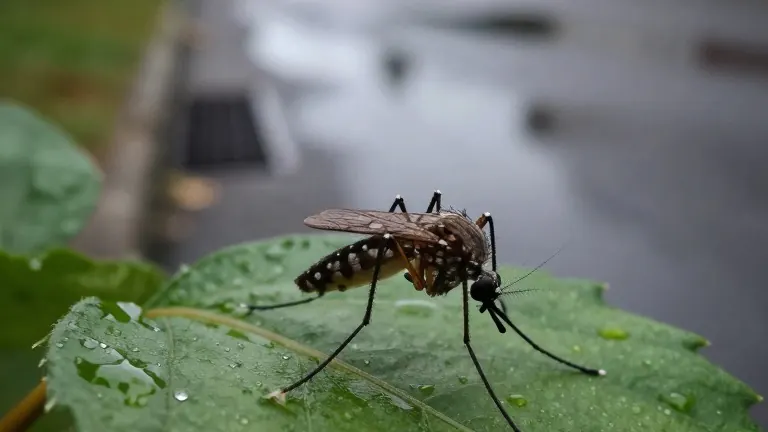
California recorded its worst West Nile virus season in five years, with 32 deaths and 528 serious illnesses reported as of Nov. 6.
The state Department of Public Health confirmed these figures, noting that Los Angeles County accounted for more than half of all reported human cases. The virus thrives in Culex mosquitoes when temperatures exceed 70 degrees Fahrenheit. A warm, wet summer and fall created ideal conditions for the insects to reproduce and carry the virus to humans.
Paula Macedo, chair of the Mosquito and Vector Control Assn. of California, said public health officials are bracing for another surge. She cited the strong forecast for an El Niño year, which brings a greater than 90% chance of heavy winter rains. Such conditions could lead to standing water in spring, creating a breeding ground for mosquitoes.
Susanne Kluh, general manager of the Greater Los Angeles County Vector Control District, explained that recent storms flushed larvicide treatments from more than 3,000 miles of underground storm drains. These drains maintain a constant temperature of about 72 degrees Fahrenheit and high humidity, making them a primary source for Culex mosquitoes. At one point this summer, more than 70% of sampled mosquitoes carried the virus, a figure that has recently dropped to about one-third.
Tristan Hallum, scientific director for the San Gabriel Valley Mosquito and Vector Control District, warned that coastal temperatures hovering in the high 60s and low 70s are near a critical threshold. A UC Berkeley study of data from 2006 to 2016 found that West Nile transmission becomes much more likely when average temperatures rise above 73 degrees Fahrenheit. This year’s heat pushed the region over that line.
Chris Barker, a professor at UC Davis who helps run the state’s West Nile surveillance program, noted that extreme weather events like floods and droughts drive outbreaks. He pointed to 2023, when heavy rains revived the Tulare Lake basin, leading to 433 human cases. Conversely, the drought years of 2014 and 2015 saw more than 1,600 cases because limited water sources forced birds and mosquitoes into closer contact.
The lack of a vaccine leaves public health officials relying on vector control measures that are straining local budgets. Districts spend millions trapping and killing mosquitoes, funded in part by property tax rates of $4 to $10 per year. New challenges include invasive Aedes aegypti mosquitoes, which breed in tiny amounts of water and resist drought. The Eaton fire in 2025 left 1,400 stagnant swimming pools, adding to the workload for control teams.
Macedo said the association is working with districts to manage these costs, but she emphasized that local efforts cannot cover every property. She urged residents to take personal steps to prevent mosquito breeding, noting that officials cannot treat every potential source.
More News · Las Vegas news · Report a business · Got a Story?