Judges Question Trump Golf Course Plans and Monumental Arch in D.C. Court
Two federal hearings in Washington on Friday tested presidential authority over a historic golf course closure and a proposed memorial arch.
By Vincent Parker ·
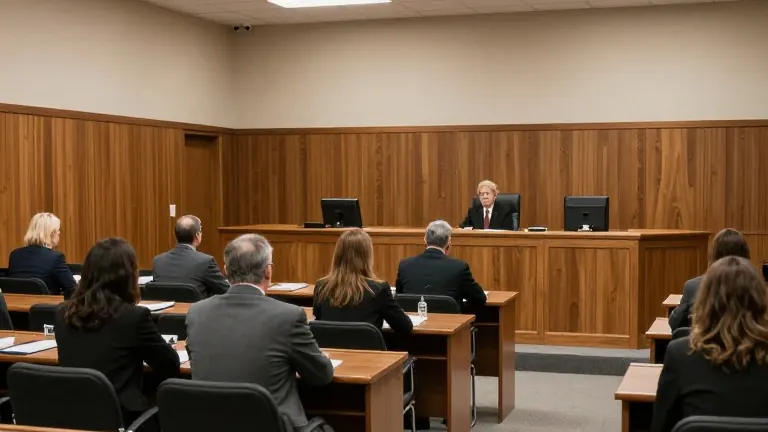
Two federal court hearings unfolded in Washington on Friday.
One case concerns the planned shutdown of East Potomac Golf Links near the National Mall. U.S. District Judge Ana Reyes questioned Associate Attorney General Stanley Woodward Jr. about how President Donald Trump's stated desire for a world-class facility became a construction schedule. Trump had written on Truth Social starting Oct. 18 that the course would close for 15 months and work would begin Nov. 15. Reyes ordered Friday's hearing after those posts.
Government officials from the Interior Department, Justice Department, and National Park Service could not initially confirm plans for the course existed. Reyes asked whom she should trust. The Justice Department filed notice Wednesday saying the plans were real and that the National Park Service would submit a rendering designed by Tom Fazio to the National Capital Planning Commission on Friday. Reyes said she intends to appoint a special master to investigate the statements made to the court. During testimony about plans Woodward said came together this week, he mentioned tree cutting as part of the closure preparations. Reyes said, "News flash." Woodward then corrected himself, saying the tree cutting occurred earlier in the month and is not part of the closure plan.
Three courtrooms away, U.S. District Judge Tanya Chutkan was scheduled to hear a request to halt construction of a memorial arch planned to begin Nov. 5. The 250-foot structure would stand 100 feet taller than the Statue of Liberty measures from its base to the top of its torch. The two projects sit less than three miles apart. Plaintiffs include a group of veterans and an architectural historian who argue in federal court that Congress must approve the project. They asked the court to block construction, writing that "the public interest leans heavily against allowing defendants to blaze ahead." David Super, a law professor at Georgetown University Law Center, said earlier administrations pursued legal theories that were sometimes legally sound and sometimes not. He said, "But there was always the assumption that you would try to do things that were legal." Super added that he believes the current approach is "going to do long-term damage to the country."
The hearing on the golf course lawsuit is scheduled to continue.