Indian Media Groups Ask Supreme Court to Strike Down Privacy Law Provisions
A group of 21 news publishers says the consent requirements in Prime Minister Narendra Modi's data privacy law amount to pre-censorship and could expose journalists' sources.
By News Media House Staff ·
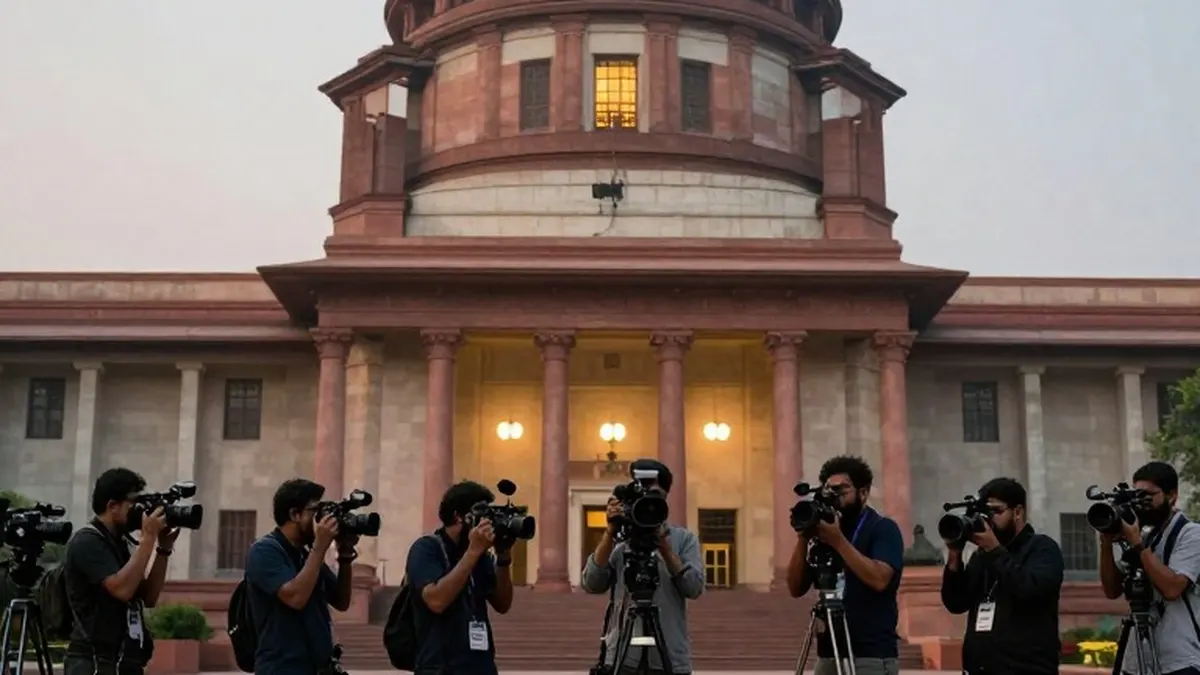
A coalition of 21 news publishers has asked India's Supreme Court to intervene against the government's privacy law, arguing that its consent rules amount to pre-censorship and could force newsrooms to close. The challenge was presented on Tuesday, according to The Indian Express newspaper.
The petitioners include companies owned by billionaires Mukesh Ambani and Gautam Adani. They argue that the law, introduced under Prime Minister Narendra Modi, would undermine investigative reporting and let the government identify journalists' sources.
Madhavi Goradia Divan, the lawyer for the Digital News Publishers Association (DNPA), told the judges the law was altering the very idea of journalism. "It is changing the whole concept of what is news," she said. She added that if reporters had to ask permission, "Newsrooms will shut down," describing the result as "a complete regime of pre-censorship." The court said it would hear the case next month.
The publishers say they were given assurances at an August meeting with the government that the law would protect press freedom. However, they said in a filing earlier this month that the lack of a written exemption for journalists was alarming. The European Union, Singapore and Britain all include such exemptions in their laws.
The DNPA's members include Ambani's Network18, which runs seven digital news platforms, and Adani's NDTV. Other members are the Indian Express and Times Internet, which belongs to the Times of India group, publisher of India's largest-selling English-language daily.
A central objection in the filing, cited by the Reuters news agency, is the consent requirement. A social media platform or online retailer can ask users for consent at sign-up, but the DNPA argues that a journalist who must notify the subject of an investigation and seek consent would give that subject the chance to "destroy evidence, intimidate witnesses."
The law also allows people to withdraw consent at any time and demand that their data be erased, with no public-interest safeguard. The DNPA says this could compel its members to unpublish or heavily redact factual news reports.
Publishers are also worried about a federal authority created under the law, which can impose fines for noncompliance. The law further gives New Delhi the power to block access to any information in the "interests of the general public," which the DNPA says would curtail press freedom.
From next year, the law will let the government order any organisation handling personal data "to furnish such information as it may call for." The filing says this puts newsrooms at risk of having to reveal their sources, and could deter whistleblowers from sharing information with reporters about corruption, corporate wrongdoing or electoral malpractice.
The DNPA said the "nakedly unguided" provision must be quashed, adding that the power "can extend to privileged communications in possession of a reporter or the informant."
Originally published by News Media House · Source: Al Jazeera