Syrian families say UN aid vanishes
Displaced Alawites in Hama claim armed groups tied to the new regime are intercepting supplies meant for victims of the coastal massacre.
By Nathaniel Hayes ·
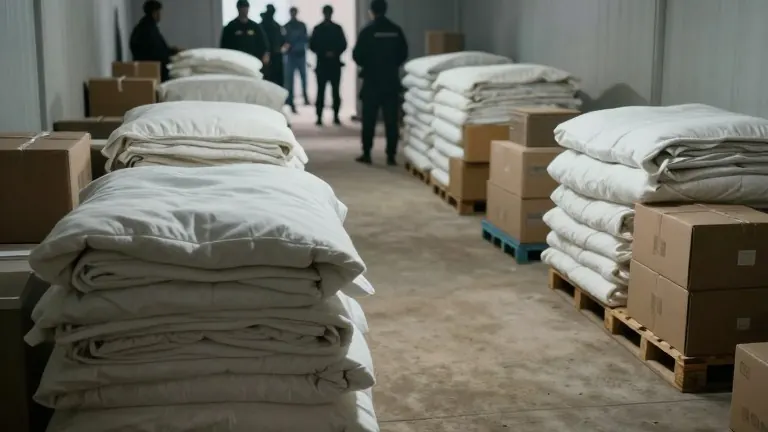
Displaced Alawite families in Syria claim that humanitarian aid intended for survivors of the March 2025 coastal massacre is being intercepted by Sunni militias. These groups, some affiliated with the interim government led by Ahmed al-Sharaa, are allegedly distributing the supplies to their own members while excluding the victims of the attacks.
A UN investigative team confirmed last year that war crimes were likely committed during the massacre in March 2025. The violence resulted in the deaths of approximately 1,400 people, the majority of whom were Alawite civilians. The new regime has taken control of aid distribution through organizations such as the Syrian Aid and Relief Committee (SARC), which several displaced families say is biased against Alawites.
R. shared a two-room apartment in rural Hama with two other families after fleeing Latakia. Her family was instructed by a community leader to register at a SARC center for mattresses and blankets. Upon arrival, men wearing Syrian General Security uniforms accused them of being remnants of the former Assad regime. They denied the families aid despite their registration.
"We went to the center, and then when we entered the center of the SARC plant, [we] saw the army of Jolani (Sharaa).. They started to tell [us] that, 'You are Alawites, you are, you are linked to the old regime, you are criminals,' and these kinds of things," R. said. She added that their names were later replaced on the distribution lists with those of local militia members or people affiliated with SARC staff.
T. spoke to reporters via video call last week, showing bandages wrapped around a foot he shot while fleeing Jableh. He witnessed the violence in March 2025 and said his paternal uncle was killed while attempting to collect UN aid. T. described the distribution sites as unguarded, allowing militias to steal food delivered under UN supervision.
"They brought Bedouins in front of the cameras under the United Nations. They started to distribute some food to the Bedouins.., and later on, they gave all the assistance to those Bedouins. So, in front of the United Nations, they were giving to other people," T. said. He noted that Alawite government employees, including doctors, have been fired, leaving many families jobless and destitute.
A UNHCR spokesperson stated that the agency did not have information about specific complaints but directed concerned parties to the Inspector General's Office. The spokesperson said non-food item assistance is distributed based on assessed humanitarian needs and eligibility criteria, without distinction based on religious or ethnic background. Recipients are identified through household visits and field monitoring, and the agency said aid has reached diverse communities across Lattakia and Tartous.