Vegas veteran credits service dog with improving daily life
Rich Earl, a retired military member, completed a pairing program with Liberty Dogs in Reno last month.
By Rosa Fuentes ·
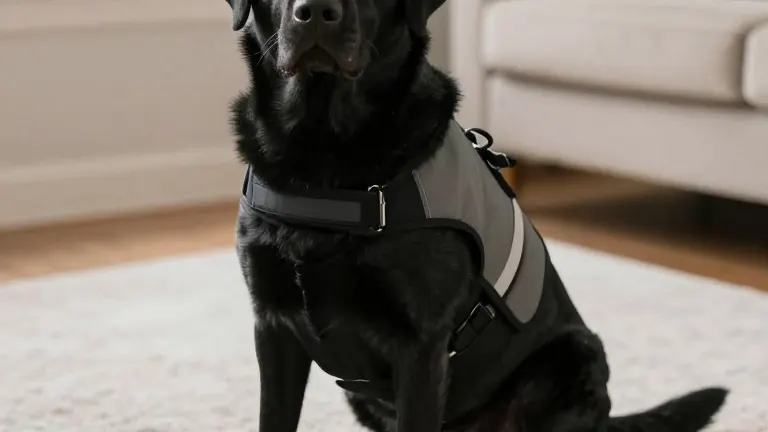
Rich Earl recently completed a two-week training camp in Reno with Reagan, a two-year-old black Labrador retriever. The pair are among the first four to graduate from Liberty Dogs’ service dog program. For Earl, who has managed post-traumatic stress disorder, back pain, and kidney disease linked to his military service, the dog has changed his daily routine. He carries Reagan on his back when she is not on duty, and he says she provides a sense of purpose that was missing before the pairing.
Earl joined the Army in 1989 at age 18. He was deployed six times to locations including Panama, Kenya, and Guantanamo Bay, Cuba. He left the military in 1991 at age 25. After returning home, he struggled to find stable work and went through a divorce. His health issues began to manifest, including breathing problems he attributes to exposure to burn pits during his service. In 2000, he started working as a liquor runner at the Venetian in Las Vegas. He retired in 2025 after doctors found an aneurysm on his right kidney and a cancerous mass on his left.
Earl’s wife learned about Liberty Dogs from a colleague at the local Department of Veterans Affairs medical center. The organization was founded by the Dave & Cheryl Duffield Foundation in 2016. The foundation uses funds to cover the cost of training, which typically exceeds $50,000 for a professionally raised service dog. Liberty Dogs operates out of a 27-acre campus in Northern Nevada. The process from application to pairing takes about 18 months.
Ondra Berry, the CEO of Liberty Dogs and a retired Nevada Air National Guard major general, oversees the program. He said the organization aims to remove barriers to mental health care for veterans. The process includes a background check and a home safety inspection. Veterans then attend a three-day Warrior Wellness class on the Reno campus. They practice leash handling to decide if they want to commit to the program. Accepted veterans attend the two-week training camp where they learn specific cues for their dogs.
Reagan was trained to perform 44 specific cues for Earl. These include jumping onto benches and lying down on command to help with grounding during anxiety. She also carries his rescue inhaler in her vest and alerts him if she detects breathing difficulties. The training is tailored to each veteran’s needs. For example, a dog might be taught to lie on a veteran’s chest during an anxiety attack if the veteran uses weighted items for comfort.
After graduation, veterans receive a vest, kennel, harness, leash, collar, and beds for their dogs. Liberty Dogs team members check in periodically, and veterans can call for support if needed. Earl practices the cues with Reagan every day. He said the dog has brought his family joy and closeness in the month since they returned home. He recommends that other veterans with PTSD consider the program alongside their VA therapy.
A September report from the VA noted almost 6,500 veteran suicides in 2024. In Nevada, 108 veterans died by suicide that year. A study published in June 2024 by the University of Arizona found that service dogs reduced PTSD symptoms, anxiety, and depression in military members and veterans. The study involved 156 participants, with 81 receiving service dogs. Those participants reported lower symptom severity and higher companionship after three months compared to those on a waitlist.
Liberty Dogs is currently seeking volunteers in Nevada to care for puppies in training. Volunteers can apply at libertydogs.org. Earl will have the first opportunity to adopt Reagan when she is too old to continue her service role. He also said he will be a priority for the next round of service dog placements.
More News · Las Vegas news · Report a business · Got a Story?