90 days: How long one AI toy company keeps voice transcripts
Curio, a manufacturer of talking plush toys, states it retains transcribed audio for three months before deleting it, a policy that raises questions about privacy as holiday sales approach.
By Nathaniel Hayes ·
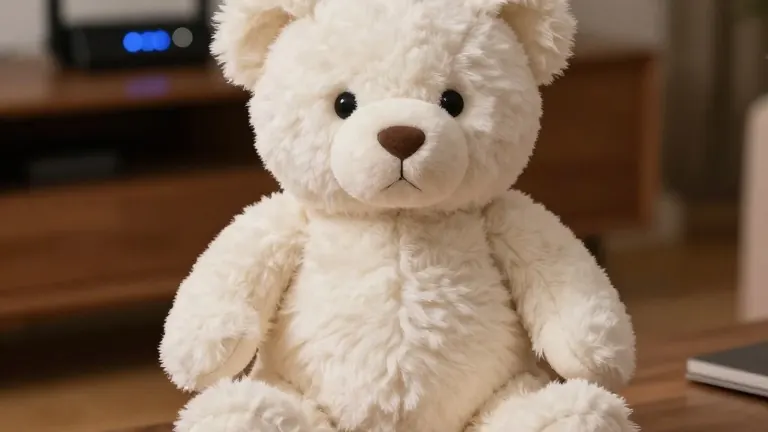
A stuffed animal that holds a conversation with a child requires a connection to the internet.
Curio, a company that produces talking plush toys, maintains a support page with instructions for connecting its devices to a home Wi-Fi network. The hardware itself contains the speaker and microphone, but the artificial intelligence software that generates the replies runs on a remote server. This architecture means the physical toy acts as a terminal for an online service. Consumers purchasing the toy are effectively buying a subscription to that data processing, even if only the plush animal arrives in a box.
The toys use generative AI to construct responses in real time. Unlike older toys that played back pre-recorded phrases, these devices can adapt to a child's specific requests. A child might ask for a story about a dragon in traffic and then decide the dragon is driving an ice cream truck. The software can modify the narrative to fit that change without human intervention. The appeal for many families is that the interaction happens without a screen.
Research suggests these systems still struggle with the nuances of play. In a study published in March, researchers at the University of Cambridge observed 14 children interacting with an AI soft toy named Gabbo. The toy failed to recognize an imaginary present offered by a three-year-old. Instead of playing along with the pretend scenario, the device replied that it could not open the present and changed the subject. The researchers also noted difficulties with interruptions and distinguishing between a parent's voice and a child's voice. These findings were limited to one specific toy and a small group of participants.
Privacy is a central concern for parents evaluating these products. Curio states that it transcribes voice data and deletes the processed audio files. The company keeps the text transcripts for 90 days. Parents can request deletion of this data through the company's mobile application. Other manufacturers may follow different protocols for data retention and processing.
Spencer Luo, a tech lead at Google and an adjunct professor at Columbia University, wrote about the category in a recent opinion piece. Luo, a resident of Great Neck, noted that while the toys are engaging, the critical test is how they handle deviations from the script. The ability to recognize when a child is shifting the rules of play, such as introducing an invisible object, remains a challenge for current models. The holiday shopping season will likely bring increased exposure to these devices in homes across the country.