Grandparents' AI Photos Expose Children's Data
Cybersecurity experts warn that images generated by older relatives often contain identifying details and remain stored on corporate servers.
By Mariam Saleh ·
A surge of AI-generated images created by grandparents is raising privacy concerns among parents in Clark County and across the nation.
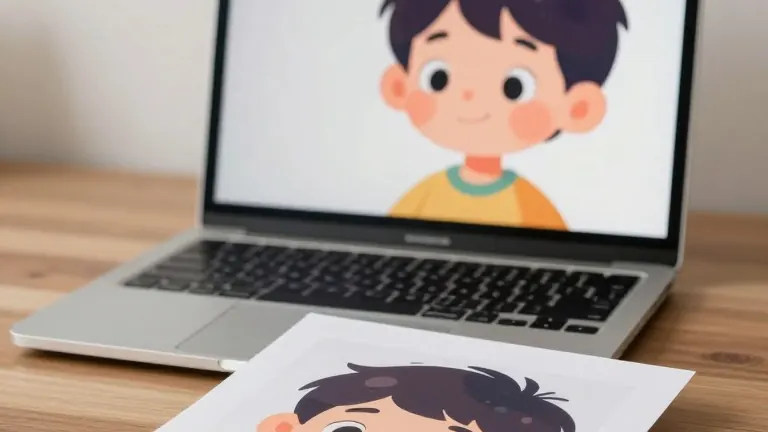
The practice, dubbed grandmaslop on social media, involves adults uploading photos of their grandchildren to platforms like ChatGPT to create cartoons or storybooks. Users often include specific details such as names, school logos, and addresses in the prompts or source images. These files are processed on corporate servers and may be used to train machine learning models unless a specific setting is disabled. That setting is rarely visible to average users.
Holly Ostrout discovered the issue when her stepmother sent back AI cartoons of her daughter and a friend from a third grade photo. The images displayed the school name and the children's names prominently. Ostrout, who had a stalker two decades ago, said the experience felt alarming because the children's identifying details were delivered directly into an AI platform.
Katherine Fleischman’s mother used ChatGPT to generate an image of her grandson Leo hugging a character from Paw Patrol for a school project. Fleischman described the image as public information being put out there, a sentiment her mother dismissed with a laugh. The grandmother has since created additional AI content, including birthday invitations and family collages, leaving Fleischman with the feeling that her child's photos are now out in the abyss.
Steve Case, a grandfather of six living in England, created an AI image of his entire family for Christmas after seeing his grandchildren only once a year. He did not consult the parents before sending the picture. Both parents posted the image on Instagram, a step that increased the risk of the image being shared beyond the immediate family.
Tiffany Shogren, senior director of AI modernization at Optiv, explained that once a photo leaves a phone, it lands on the AI tool's servers attached to the user's account. If the user has not changed the default settings, the photo can be used to train AI models. Shogren noted that deleting the chat stops future use but does not remove the data from models that have already been trained. She warned that prompts often combine a child's face with other identifying markers, creating a digital profile rather than a simple snapshot.
DeeDee Moore, who runs the website More Than Grand, reported that companies selling AI keepsakes have inundated her with pitches. She received six emails in the past two weeks alone, offering coloring pages and hardcover storybooks. Moore said the requests have ramped up significantly in the last four to five months. She has turned down all offers, citing privacy concerns that many grandparents may not fully understand.