G20 ministers end Atlanta talks without joint statement
Diplomats will issue a chairman's statement instead after disputes over Ukraine and Iran prevented a unified declaration.
By Vincent Parker ·
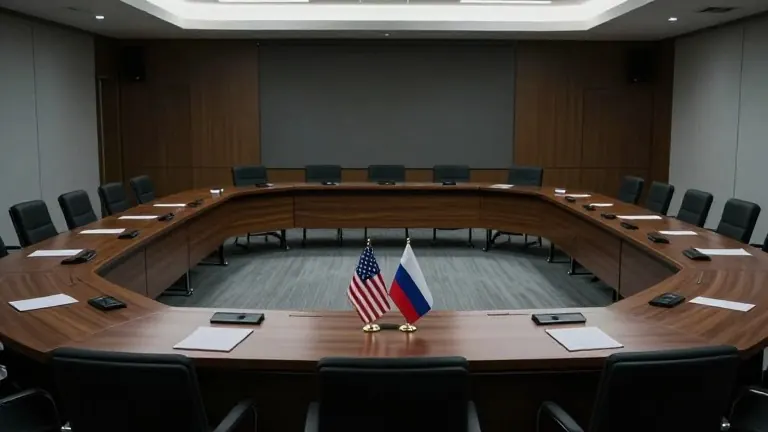
G20 foreign ministers concluded two days of negotiations in Atlanta on Saturday without agreeing on a shared statement.
The group will issue a chairman's statement rather than the traditional joint communique. Secretary of State Marco Rubio is scheduled to release the document at the end of the session. Officials attributed the shift to deep divisions among the 20 largest economies on critical security matters.
Disagreements centered on the Russia-Ukraine war, the U.S. conflict with Iran, U.S. tariffs, and China's actions in the South China Sea. These conflicts have driven up global fuel costs and created uncertainty in trade. Diplomats noted that the U.S. decision to exclude G20 member South Africa also fueled tension. Poland attended as a guest for the first time, a move opposed by Russia.
Marco Rubio opened the talks by urging unity. He canceled the standard group photo on Friday after European diplomats objected to including Russian Foreign Minister Sergey Lavrov. Some European representatives threatened to walk out if the photo included Lavrov. Rubio also met on the sidelines with Saudi Arabia's Prince Faisal bin Farhan and Turkey's Hakan Fidan.
Polish Foreign Minister Radoslaw Sikorski told reporters he was not surprised by the lack of consensus. He noted the difficulty of agreeing on a common line while participants in active wars sit at the table. Lavrov stated that Moscow will not allow Ukraine to pose a military threat to Russia's legitimate security interests.
The State Department announced Friday that it approved a $2.1 billion sale of Patriot air defense interceptors to Ukraine. This decision came after President Donald Trump waived fresh sanctions on Moscow and temporarily limited logistical and intelligence support to Ukraine. The U.S. has identified resolving differences over freedom of navigation as a top priority for the meeting. Key areas of focus include the Strait of Hormuz, the Red Sea, the Black Sea, and the South China Sea.
U.S. officials have told Middle East countries and regional allies to prepare for potential renewed military strikes against Iran after the midterm elections. They also warned of possible Iranian retaliation. Lavrov has visited NATO member states infrequently since Russia invaded Ukraine in February 2022. It remains unclear if President Vladimir Putin will accept the invitation to attend the G20 leaders summit in Florida in December.