Lula wins Brazil election by 4 million votes after turnout surge
An extra 10.4 million voters joined the runoff, helping the incumbent defeat Senator Flávio Bolsonaro, who has filed a challenge to the result.
By Vincent Parker ·
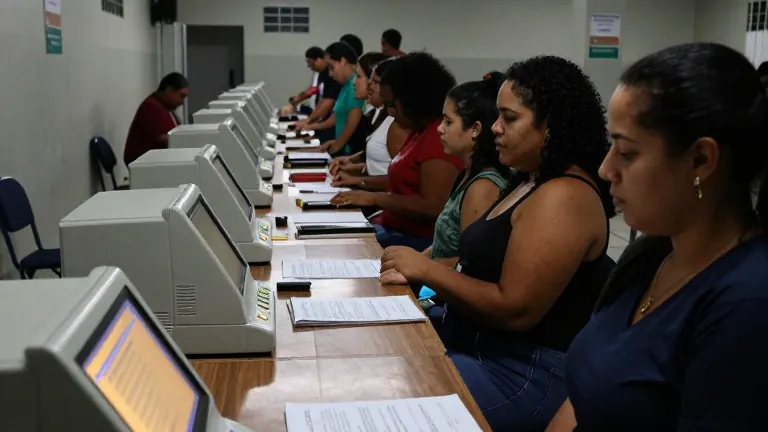
An additional 10.4 million Brazilians cast ballots in the presidential runoff on Sunday, a surge that allowed incumbent President Luiz Inácio Lula da Silva to defeat Senator Flávio Bolsonaro by nearly four million votes.
Lula secured more than 64 million votes against Bolsonaro’s just under 60 million. The winner is scheduled to take office on Jan. 5, 2027, for a fourth non-consecutive term.
Senator Flávio Bolsonaro announced on Sunday that he plans to request an annulment of the election. His father, former President Jair Bolsonaro, is serving a 27-year sentence for a coup attempt and unsuccessfully contested his own loss to Lula in 2022. The younger Bolsonaro visited his father at his house arrest location on Monday.
President Donald Trump suggested on Monday that the election was rigged, though he provided no evidence. He told reporters that the tabulation process looked bad and resembled a fraudulent vote. Trump, who is aligning with right-wing leaders in the region, has previously expressed skepticism about the outcome.
The vote count was complicated by a last-minute decision to extend voting nationwide. Supreme Court officials approved the extension minutes before polls were set to close at 5 p.m. Local time. Lula requested the extension due to public transportation issues in São Paulo and Salvador, while Bolsonaro cited heavy rains in the south. Many polling stations did not receive the news until they were already closing.
Analysts attribute Lula’s victory to a digital campaign led by lawmaker André Janones. Janones used a WhatsApp channel called Lula's Army, which gathered nearly 11 million people to mobilize voters. This effort targeted previous non-voters and supporters of third-party candidates who did not advance to the runoff.
Brazil’s electoral court ruled on Oct. 15 that Meta must treat both candidates equally on its platforms. Professor Juliano Cortinhas said this move helped address algorithmic bias that had favored right-wing content. The second round saw the lowest number of abstentions in history, reversing a record high of non-voters from the first round.
Kassio Nunes, president of Brazil’s electoral authority, recognized Lula’s victory on Sunday. Nunes was appointed to the Supreme Court by Jair Bolsonaro. Brian Winter, an analyst at Americas Quarterly, noted that Brazilian power brokers are closing ranks behind Lula, making a legal challenge a difficult path for the losing side.
Source: ABC News