Nevada advocates clash over data center water and power needs
Community groups in Reno debated the environmental impact of new computing facilities, focusing on methane plants and irrigation demands.
By Nathaniel Hayes ·
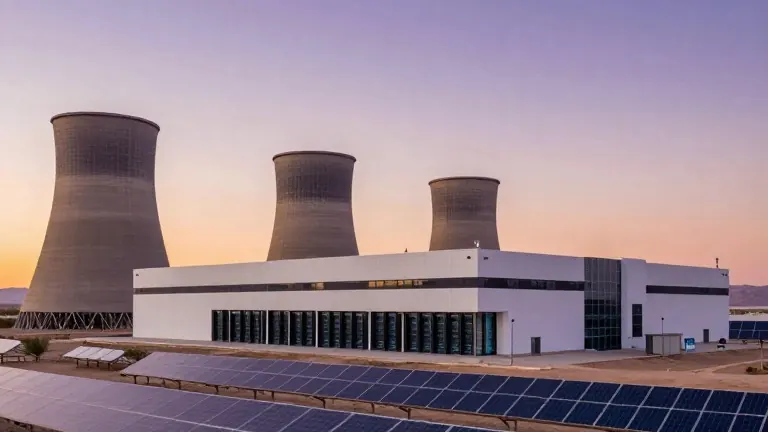
A group of environmental and tribal advocates met in Reno on Monday to challenge the state’s current approach to data center construction. The coalition, which includes climate experts and representatives from the Walker River Paiute Tribe, argued that the rapid expansion of computing infrastructure strains local resources. They specifically targeted the energy mix used to power these facilities and the volume of water required for cooling systems.
The discussion centered on the Monarch Data Center in Lyon County. Josh Dini, a representative for the Walker River Paiute Tribe, stated that the site sits on private land, which complicates the water usage debate. "It’s on private land. And our concern is the water," Dini said. He emphasized that the location’s proximity to the tribe’s territory makes the irrigation demand a local issue rather than just a corporate one.
Debra Hendrickson, a climate advocate for the Nevada Chapter of the American Academy of Pediatrics, connected the expansion to the state’s warming climate. She noted that Nevada is one of the fastest warming places in the country. Hendrickson cited the wildfires at the north end of town this summer, which forced tens of thousands of residents to evacuate, as a direct manifestation of the greenhouse gas threat. She questioned why the state is pursuing artificial intelligence goals through methods that feel destructive to the environment.
A primary point of contention was the reliance on fossil fuels. Bri Schmidt of the Nevada Conservation League argued against the construction of new methane gas plants. She pointed out that Nevada receives over 300 days of sunshine annually. Schmidt suggested that the grid could rely more on existing rooftop solar panels installed in local homes to meet the new demand for electricity, rather than spending millions on new gas infrastructure.
Tray Abney, representing the Nevada Data Center Coalition, offered a counterpoint regarding energy and water. He highlighted Greenlink Energy’s plan to connect the northern and southern power grids. Abney explained that these new transmission lines pass through areas suitable for solar, wind, and geothermal development. This connection, he argued, allows for a more diverse and renewable energy supply for the data centers.
Abney also addressed the water usage question by distinguishing between older and newer facilities. He stated that data centers built 10 or 20 years ago use different cooling technologies. For newer projects, he described a closed-loop system. "Water and glycol that cools off their systems.. That stays in there for pretty much the life cycle of the building," Abney said. He compared the system to a car engine, noting that the fluid only needs replacement if a problem occurs, suggesting that water is not a major issue for modern construction.
The meeting concluded with the advocates continuing to press for a shift toward renewable energy sources and greater transparency on water consumption. The coalition plans to keep monitoring the proposed plans for the Greenlink Energy grid connection and the expansion of the Monarch Data Center in the coming months.
Source: KVVU-TV · original report published
More News · Henderson news · Report a business · Got a Story?