Sleep specialists say 44% of U.S. adults struggle with rest
Experts identify 6.8 to 7.4 hours as the optimal duration and warn that melatonin is often overused for chronic insomnia.
By Jasmine Carter ·
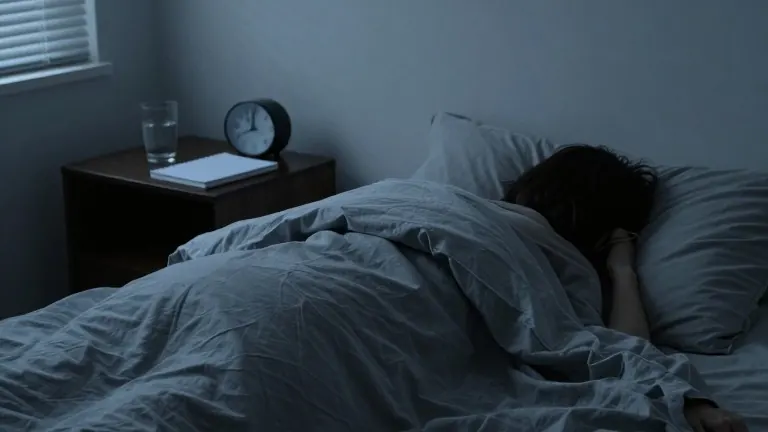
A growing number of Americans are not getting enough rest, and medical professionals say the problem is more common than most people realize. A 2025 survey commissioned by the American Academy of Sleep Medicine found that 44% of adults always or frequently have trouble falling asleep or staying asleep. The rate is higher among women, with 48% reporting these issues. The survey also noted that 34% of adults experience occasional sleep problems.
Dr. Keisuke Miyamoto, an internal medicine physician and assistant clinical professor of medicine at the John A. Burns School of Medicine, says the old advice to sleep eight hours or more is outdated. He cites a recent study in Nature that suggests the optimal range is 6.8 to 7.4 hours. Miyamoto warns against sleeping less than six hours or more than nine, as both extremes increase health risks. He notes that while some people function on five hours, most perform better at the optimal level.
Sleep quality is measured by efficiency and REM cycles. Miyamoto explains that good sleep efficiency falls between 85% and 95% of time in bed. Patients should also aim for 20% to 25% REM sleep, which helps the brain process information and regulate mood. If these metrics are met, the sleep is generally considered high quality.
Courtnee Nunokawa, a nurse practitioner in primary care and lifestyle medicine, says sleep problems become serious when they persist beyond four weeks. She looks for signs such as taking longer than 30 minutes to fall asleep or waking up without feeling restored. She warns that after four weeks, the body starts habituating to poor sleep patterns. For many patients, the first-line treatment is cognitive behavioral therapy for insomnia, or CBT-I. This approach changes lifestyle behaviors to support healthy circadian rhythms. Nunokawa notes that CBT-I is effective but requires significant effort and motivation.
Dr. Halley Tsai, a pulmonologist and sleep specialist at The Queen’s Health Systems, advises patients to start with a primary care physician to rule out medical issues like hormonal changes or pain. If those are not found, she recommends a referral to a sleep center or for CBT-I. Tsai says that while sleeping pills can help, they can lead to tolerance. She suggests using them in tandem with CBT-I under the guidance of a sleep coach to minimize daily reliance.
Julie Takishima-Lacasa, a clinical health psychologist and behavioral sleep medicine specialist, clarifies the role of melatonin. She states that it is a hormone that signals nighttime to the body, not a sedative. It does not improve sleep quality or quantity and does not address the root cause of chronic insomnia, which is conditioned hyperarousal. U.S. sleep guidelines recommend against using melatonin for insomnia. Its only defensible use for healthy adults is as a tool for jet lag, shift work disorder, or sleep-wake phase disorder. Takishima-Lacasa adds that no over-the-counter supplements have strong enough scientific evidence for long-term insomnia benefits without risks to warrant a direct recommendation.