
Clocks Turn Back as Federal Push for Permanent Daylight Saving Time Gains Momentum
While Americans gained an hour of sleep Sunday, the House has passed a bill to keep daylight saving time year-round, a move backed by President Trump.
By Mariam Saleh ·
U.S. House members voted overwhelmingly in July to pass the Sunshine Protection Act, a bill that would make daylight saving time permanent. President Donald Trump supports the legislation and is actively pressuring senators to vote for it. He posted the cellphone number of Arkansas Senator Tom Cotton, a known opponent, on social media to encourage the vote. The House action followed a widely disliked biannual ritual that just concluded for most Americans.
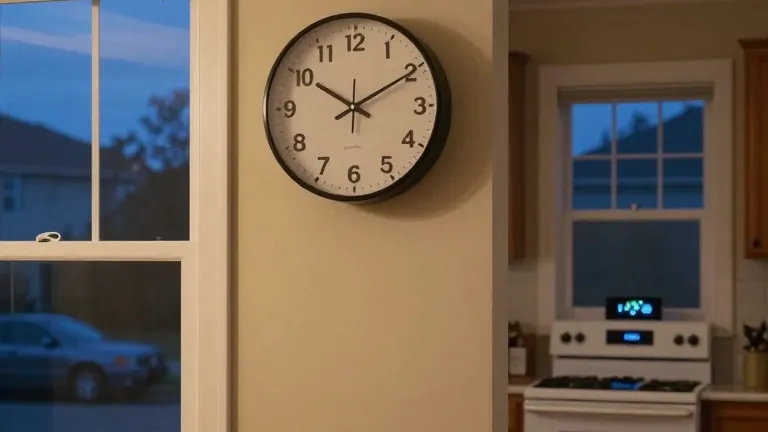
Clocks moved back one hour at 2 a.m. Sunday, ending daylight saving time and ushering in standard time. Most residents of Clark County gained an extra hour of sleep over the weekend, though the shift also brought darker afternoons. This standard time period will last until March 14, when clocks will spring forward again. Residents with manual clocks on stoves or in vehicles must adjust them now, as these devices do not update automatically.
The current system faces stiff opposition from the public. An AP-NORC poll conducted last year found that only 12% of American adults favored the twice-yearly time change. Nearly half of adults opposed the practice. When forced to choose between keeping the extra evening daylight or eliminating the switch entirely, most Americans preferred to retain the later sunset.
Health organizations have long argued against the current arrangement. The American Medical Association and the American Academy of Sleep Medicine urge a permanent shift to standard time. They cite the human circadian rhythm, a roughly 24-hour internal clock that aligns better with standard time because the sun rises later in winter. Brighter mornings and darker nights help regulate this rhythm, making it easier for people to wake up and maintain healthy sleep patterns.
The brain’s master clock relies on sunlight and darkness to set sleep and alertness cycles. Morning light is critical for synchronizing this internal timer. By evening, the hormone melatonin levels rise to trigger drowsiness. Exposure to bright light in the late afternoon, common during daylight saving time, delays this melatonin surge and can disrupt the cycle. This internal clock also influences heart rate, blood pressure, stress hormones, and metabolism.
An hour change can disrupt sleep schedules because work and school start times remain fixed. The spring change is often harder for people, as darker mornings make it difficult to fall asleep on time. Research links those first few days after the spring switch to increases in car crashes and heart attacks. The fall change can worsen symptoms for people with seasonal affective disorder, a type of depression linked to shorter days and reduced sunlight.
Shift workers and those already sleep-deprived face extra pressure during these transitions. About one in three U.S. adults sleeps less than the recommended seven hours per night. More than half of U.S. teens do not get the recommended eight hours on weeknights. Chronic sleep deprivation is associated with heart disease, cognitive decline, and obesity. Many people adjust to the change as they would from jet lag, but the pressure can be significant for those with irregular schedules.
Experts suggest preparing for time changes by shifting bedtimes by 15 minutes per night in the days before the switch. Morning sunshine is essential for resetting the circadian rhythm. If going outdoors is not possible, sitting by a window can provide the necessary light exposure. The United States tried permanent standard time in the 1970s, but the policy lasted less than a year before public outcry forced a reversal.
Most countries do not observe daylight saving time. Among those that do, mostly in North America and Europe, the dates for changing clocks vary. In the United States, Hawaii and most of Arizona do not change clocks and remain on standard time year-round. The debate in Washington continues as lawmakers weigh the economic and health impacts of the seasonal switch against the logistical challenges of a permanent time zone.
More News · Las Vegas news · Report a business · Got a Story?