
Taliban maintain five-year education ban
Afghan leaders say conditions are not yet suitable for female students to return to classrooms, a claim historians and Islamic scholars dispute.
By Nathaniel Hayes ·
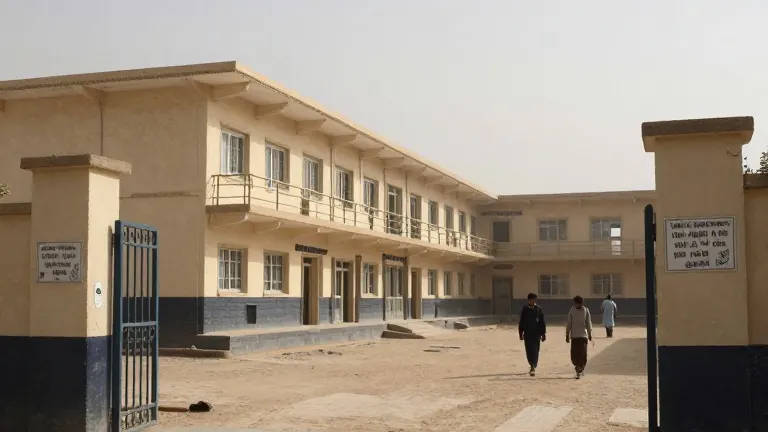
Kabul, Afghanistan. Five years after the Taliban took power, female students remain largely excluded from formal schooling. The militant government has maintained a five-year ban on girls attending school, a policy it defends by claiming the nation needs time to prepare appropriate conditions. More than 1,800 days have passed since the initial order was issued. When pressed on the timeline, Taliban officials continue to state that the current moment is not right for female students to return to in-person classes. This delay has extended the period during which girls are kept out of secular schools while the government expands its ideological curriculum.
The ban affects a country where food insecurity is widespread and children die from treatable illnesses. The Taliban argue that inclusive education contradicts Afghan culture and Islamic teachings. Historians and Islamic scholars disagree with this assessment. They state that excluding female students from school lacks religious justification. Leaders of other Muslim-majority nations have also voiced agreement with these scholars. They view the current exclusion of girls as inconsistent with the broader Islamic world's approach to education. This dispute highlights a clash between the Taliban's interpretation of faith and the views of established religious authorities.
The government is simultaneously reshaping the educational infrastructure to align with its extremist ideology. Madrassas aligned with the Taliban's version of faith have replaced many secular schools. Unqualified educators now lead these classrooms. The number of jihadi madrassas has grown. Corporal punishment is a common practice in these settings. The curriculum now includes propaganda that promotes bias and hatred of Western values. This shift represents a move from secular education to a system focused on indoctrination. The Taliban use this infrastructure to expand their ideological reach to all young Afghans, not just girls. This process has continued unchecked for five years.
International engagement with the Taliban has increased despite the government's lack of formal recognition. Taliban ministers frequently appear in photos alongside international officials during bilateral meetings and high-profile events. Taliban diplomats have taken control of a growing number of Afghan missions in Europe, the Middle East, and Asia. In August, diplomatic officials joined Taliban representatives to mark the fifth anniversary of the international withdrawal from Afghanistan. The event featured ornate decor and ice sculptures. Countries are pursuing engagement with the Taliban on issues including trade, transportation, immigration, defense, agriculture, and education. This engagement occurs even as female Afghans are excluded from public participation in these sectors.
Natalie Gonnella-Platts, director of Global Policy at the George W. Bush Institute, argues that the global community must act with more force. She notes that targeted sanctions against Taliban officials are not fully enforced. Most Taliban officials, including cabinet members, are not subject to targeted sanctions. Supreme Leader Haibatullah Akhundzada is among those not currently sanctioned. Gonnella-Platts points out that tools such as the Global Magnitsky Act have not been universally utilized to pressure those responsible for human rights abuses. She also criticizes nations that host sanctioned Taliban officials without granting them travel ban exemptions. These host nations are rarely penalized for allowing sanctioned individuals to attend their events.
The United States and other nations need to prioritize support for female education in Afghanistan. On the ground, individuals and organizations are filling the void left by the government's ban. They often use underground or virtual classrooms to keep students learning. Gonnella-Platts argues that these brave groups cannot be expected to do the work alone. Every student who continues to learn and every classroom that persists challenges the Taliban's goals of ideological expansion. Support for girls' education serves as a direct countermeasure to the Taliban's strategy. It is a matter of security policy as well as human rights.
Gonnella-Plasts suggests that the Taliban should face designation as a Foreign Terrorist Organization. She also proposes that the ministries the Taliban exploit be named as primary money laundering concerns under section 311 of the USA Patriot Act. The situation in Afghanistan is complex, and local Afghans understand the difficulties better than anyone. This complexity does not absolve the global community of its responsibility to push back. The topic of girls' and women's education remains a point of contention for the Taliban. For the rest of the world, it must remain a priority in their diplomatic and policy strategies. The five-year mark serves as a clear indicator of the Taliban's sustained commitment to this exclusionary policy.
More News · Las Vegas news · Report a business · Got a Story?