California's 1200-Watt Limit Arrives In January With No Renter Safeguards
The Plug and Play Solar Act skips landlord approval but leaves tenant rights to balcony solar unaddressed in state law.
By Nathaniel Hayes ·
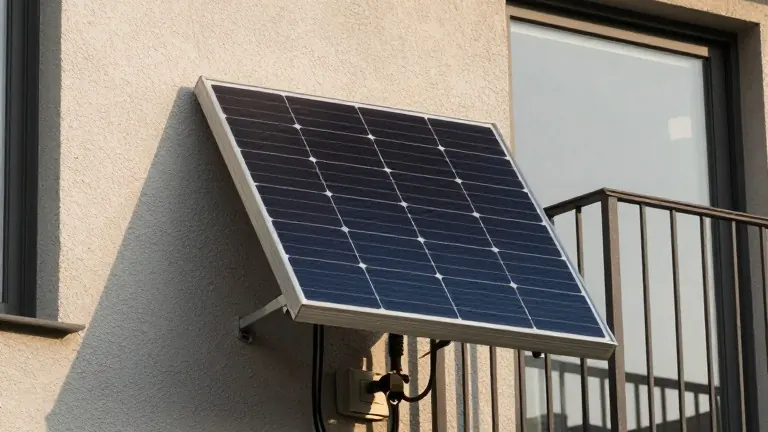
California will let residents plug solar panels into wall outlets without utility approval beginning in January, but the law does not say whether landlords can stop tenants from doing it. Governor Gavin Newsom signed the Plug and Play Solar Act last month. The statute allows certified panels rated below 1200 watts to be installed without permission from a utility.
The question of tenant access remains open. "It's a bit of an open question," said Joseph Kaatz, senior staff attorney at the Energy Policy Initiatives Center at the University of San Diego School of Law.
The state's solar protections were written for a different era. The Solar Rights Act dates to the 1970s and mainly bars rules on property sales and transfers that would restrict solar use. Kaatz said it helped resolve disputes between homeowner associations and their members as rooftop panel interest grew in the 2000s. He said there is a strong case that its language covers rental agreements, but the issue has not been tested because balcony solar is new.
Other states addressed the tenant question directly. New Jersey passed a law this year that bars landlords from prohibiting balcony solar while requiring tenants to give notice and follow reasonable limits on panel size and placement. Colorado, Virginia and Vermont have similar provisions, and a bill introduced in Congress would require states to protect renters' access. California's law does not.
Landlords cite insurance concerns. Daniel Yukelson, executive director of the Apartment Assn. of Greater Los Angeles, said his group may seek an amendment next year. "There are literally no parameters in the law that we are aware of that would restrict the installation of these things," Yukelson said. "Solar panels can be installed on the outside of a building, and wires can run everywhere, and those create trip hazards and panels can create fire hazards."
The Southern California Rental Housing Assn. opposed the bill while it moved through the Legislature because the measure would let tenants connect devices without telling landlords. "The law doesn't specifically address rental housing," spokesperson Tanya Mannes Castaneda said. Bernadette Del Chiaro, a senior vice president at the Environmental Working Group, which co-sponsored the bill, said the group would return to the Legislature if landlords begin blocking the panels. "Since landlords don't pay the utility bill for their tenants most of the time, it is unreasonable for them to place burdensome restrictions on their tenants," she said.
Manufacturers report that homeowners still buy most of the units. Michael Scherer, co-founder of Craftstrom, said 95% of his company's U.S. customers own their homes. Cora Stryker, co-founder of Bright Saver, said the certification process requires an electrician to rewire outlets for a special plug, and renters usually do not hire electricians. Bright Saver sells two 180-watt panels for $414 with a $29 membership. Its calculator estimates a 360-watt system would save a customer in the Los Angeles Department of Water and Power's East Hollywood territory between $113 and $142 in the first year.
No plug-in system has cleared certification yet. UL Solutions requires panels to meet its standards before they can be sold under the law, and advocates expect at least one kit to be approved by the end of the year. Colleen O'Brien, a principal engineer at UL Solutions, said the testing body is concerned that systems under 400 watts can overheat electrical components. "Lower wattage alone does not eliminate those risks," O'Brien said in a statement.
Source: Los Angeles Times · original report published
More News · Las Vegas news · Report a business · Got a Story?