California Democrats Face Budget Deficit After Election
State leaders must address an $18.5 billion operating deficit and housing shortages as voters decide on key tax measures.
By Nathaniel Hayes ·
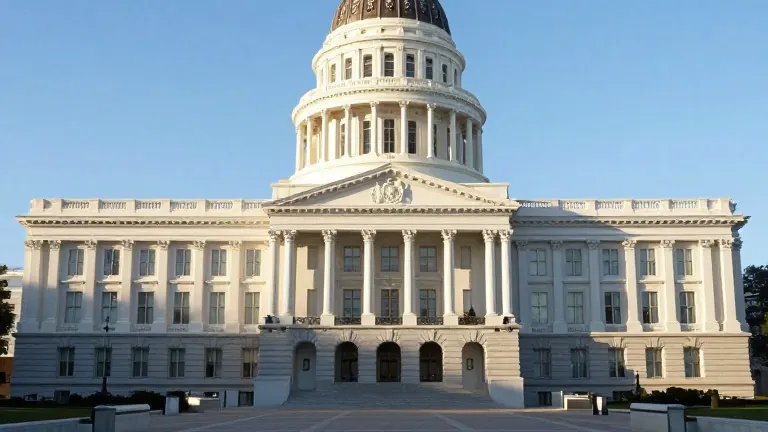
California Democrats hold a firm grip on state government following Tuesday's election, yet they face an immediate financial crisis. The state’s Legislative Analyst’s Office estimates an $18.5 billion operating deficit for the current fiscal year. This gap is projected to expand to $29 billion by year's end, creating a debt burden that will define the administration's early agenda.
The political landscape has shifted toward fiscal conservatism among voters. Public Policy Institute of California survey director Mark Baldassare noted that most Californians now prefer lower taxes and fewer services. However, a majority of likely voters also want wealthier residents to pay more. This tension is central to several ballot measures that voters will decide on soon, including a one-time tax on residents with over $1 billion in assets and a permanent income tax for those earning at least $371,000 annually.
Housing remains a primary concern for the incoming leadership. Governor Gavin Newsom pledged to build 3.5 million homes by 2025 during his 2018 campaign, but only about 692,000 have been constructed since he took office in 2019. The median home price has climbed from approximately $570,000 in 2018 to $900,000 in 2026. UC San Diego political science professor Thad Kousser observed that while new laws have helped at the margins, prices continue to rise, leaving the issue unresolved for the next term.
Healthcare costs are straining the budget as well. Medi-Cal spending now represents 40% of the state's total expenditure, with projections reaching $219 billion this fiscal year. New Democratic Governor-elect Xavier Becerra has promised to cut waste and crack down on fraud. He faces the task of maintaining coverage for low-income residents while federal Medicaid funding decreases and state budget shortfalls persist.
The new administration must also resolve disputes over wildfire liability. Governor Newsom previously proposed limiting utility companies' financial responsibility for fire damage, a plan that was criticized as a corporate bailout. The Assembly recently declined to vote on a compromise deal intended to speed up compensation for victims. Strategist Rob Stutzman stated that the state will likely have to choose between raising utility rates, increasing insurance premiums, or providing government subsidies.
The incoming governor will submit a state budget to legislators in January. The budget must address chronic issues such as homelessness, energy costs, and infrastructure maintenance. UCLA economics professor Lee Ohanian pointed out that the state budget has expanded by 75% in the last eight years, yet public services like education have not seen proportional improvements. Only about 38% of California students met state mathematics standards, despite a school budget exceeding $500,000 per classroom annually.
Voters will also decide on Propositions 1, 37, and 45. These measures authorize the state to borrow $11.25 billion for low-income and veteran housing, create a $25 billion down payment assistance program, and overhaul environmental review processes to speed up housing and infrastructure projects. These decisions will determine the state's fiscal path and its ability to address affordability concerns in the coming years.
More Politics · Las Vegas news · Report a business · Got a Story?