Nevada voters weigh Lombardo, House races as national stakes rise
With polls open 7 a.m. To 7 p.m., Clark County residents cast ballots in a competitive governor's race and congressional contests that could reshape federal oversight.
By Vincent Parker ·
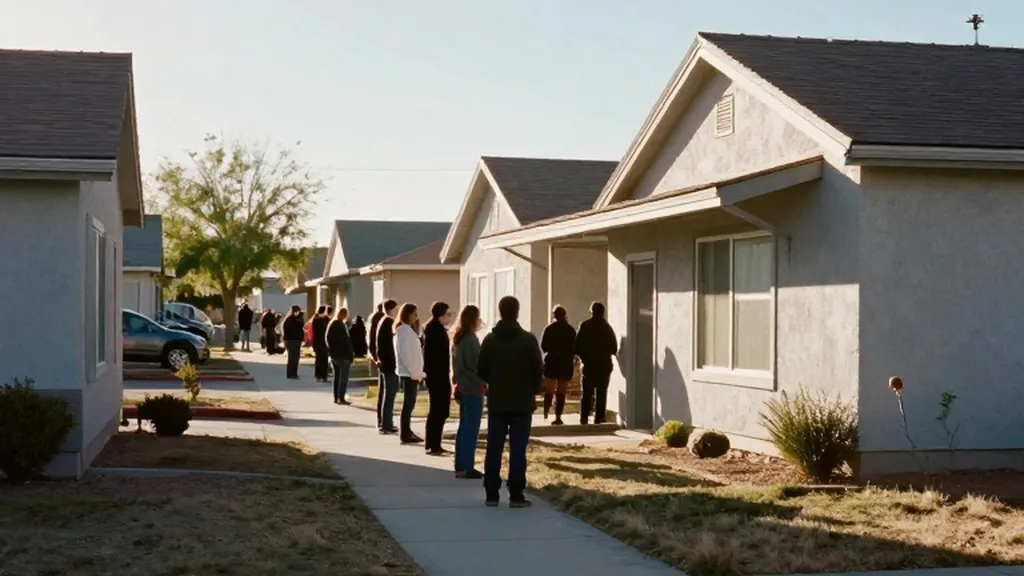
Voters across Clark County, Nevada, are heading to the polls or tracking mail-in results on Election Day, Tuesday, November 3, 2026. The state holds polls from 7 a.m. To 7 p.m. Local time, with many residents having already submitted ballots by mail as is common in Nevada. The day marks the midterm election, a critical checkpoint halfway through President Donald Trump's second term where the outcome will determine which party controls Congress for the final two years of his administration. In the state, every U.S. House seat is on the ballot, alongside state and local offices that vary by county in Las Vegas, Henderson, and North Las Vegas. The governor's race is a central focus, pitting incumbent Republican Joe Lombardo against Democratic Attorney General Aaron Ford.
Beyond state lines, the national picture is defined by intense competition for control of the House and Senate. All 435 House seats are up for grabs, with Republicans currently holding 218 and Democrats 214. Democrats need a net gain of three districts to secure a majority, while Republicans can afford to lose no more than two. The Associated Press describes the election as a referendum on the president's second term, with voters grappling with high prices and anger over an unpopular war with Iran. AP-NORC polling indicates that 35 percent of U.S. Adults approve of Trump's job performance, and about seven in ten say the country is heading in the wrong direction.
In the Senate, 35 seats are contested, including 33 regular elections and two special elections for the remainder of terms previously held by Marco Rubio and JD Vance. Republicans hold 53 seats, while Democrats hold 45 plus two independents who caucus with the Democratic party. Democrats require a net gain of four seats to take control of the chamber. The Associated Press notes that Republicans were bracing for potential losses in the House while fighting to hold the Senate, with one or two seats potentially tipping the balance. Key battlegrounds include Georgia, where Senator Jon Ossoff faces Representative Mike Collins, and North Carolina, where former Governor Roy Cooper challenges Michael Whatley for the seat vacated by retiring Senator Thom Tillis.
The outcome of these races has immediate implications for the legislative agenda and oversight powers. If Democrats win even one chamber, investigations and possible impeachment proceedings become likely. House Democratic Leader Hakeem Jeffries would become the first Black speaker if his party controls the House. He has outlined a 100-day agenda focusing on the cost of living and oversight mechanisms. A strong Democratic performance could also boost potential 2028 presidential candidates such as Gavin Newsom, JB Pritzker, and Pete Buttigieg, while potentially complicating the path for Vice President JD Vance.
Governor races are also pivotal, with 36 governorships on the ballot. Heading into the election, Republicans hold 26 offices and Democrats 24. In Nevada, the race between Lombardo and Ford is viewed as a significant indicator of national trends. The Associated Press identifies other competitive governor races in Texas, Florida, and Iowa. Democrats hope to hold a majority of governorships for the first time in two decades, a goal that has eluded them since 2010. In Georgia, former Atlanta Mayor Keisha Lance Bottoms challenges Republican health care executive Rick Jackson in a race to succeed Brian Kemp.
Election administration has been a source of tension ahead of the vote. A federal judge temporarily barred the Trump administration on Monday from carrying out a plan intended to prevent noncitizen voting. Critics argued the plan risked disenfranchising eligible voters and infringing on state authority. Additionally, a judge ordered the administration to stop demanding that California election officials segregate ballots cast by people on lists of suspected noncitizens. The U.S. Postal Service added hours, staff, and special lines to ensure mail ballots are counted on time, a critical measure given the high volume of early voting.
Financial dynamics are shaping the campaign landscape, with the 2026 elections likely becoming the most expensive in history. Republican committees outraised and outspent Democratic committees, aided by Trump-affiliated groups and Elon Musk. However, at the candidate level, Democrats outraised their opponents. An analysis of AdImpact data shows that 88.1 percent of Republican general election TV ad spending went to states and districts Trump won in 2024. This targeted spending includes more than 850 million dollars in areas where he won by 10 points or more, reflecting a strategy to consolidate support in key regions.
Voters expressed a range of sentiments about the election's significance. Mark Barker of Palm Beach Gardens, Florida, said that he has been following Trump's lead and believes the president is doing an awesome job. In contrast, James Moore, a 57-year-old librarian in Raleigh, North Carolina, cited rising costs, stating that he is paying more taxes, more for healthcare, and more for everything. RNC Chairman Joe Gruters emphasized that everything depends on turnout, asserting that if Republicans turn out their voters, they will win. DCCC Chair Rep. Suzan DelBene countered that the American people are angry and want change, highlighting the emotional stakes of the vote.
The election also carries economic weight beyond political control. Reuters notes that Wall Street is watching for results that could add to investor concerns about AI spending and debt ceiling negotiations. The potential for a split government or a unified party in Congress has direct implications for legislative priorities and fiscal policy. In Nevada, the outcome of the governor's race will influence state budget decisions and infrastructure projects in Clark County's major cities. The new congressional maps in states like Florida and Texas may also affect how future districts vote, as Republicans tried to beat the midterm pattern through redistricting.