
LA and Long Beach Ports Plan $60 Per-Trip Payout for Electric Trucks
Harbor commissions are weighing a new incentive program to offset the high operating costs of electric big rigs in Southern California.
By Rosa Fuentes ·
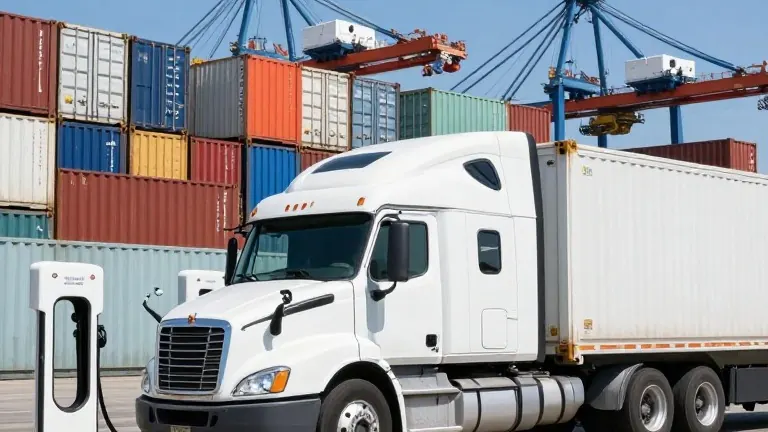
The ports of Los Angeles and Long Beach are considering a joint program that would pay electric truck operators $60 for every one-way trip to or from the harbors.
The initiative aims to address the high costs of switching from diesel to electric vehicles. Trucking companies say the upfront and maintenance expenses have made the transition difficult, even as diesel prices remain high.
The ports have been raising funds for this purpose since 2022. At that time, they began collecting a $10 clean truck fee from diesel rigs. The plan calls for spending $60 million from this fund on the new per-move incentive. This would be the first program of its kind in California.
Port leadership has set specific timelines for reducing emissions. The Port of Los Angeles wants to use zero-emission cargo-handling equipment by 2030. It also aims to have an all-electric fleet of short-distance container trucks by 2035. The Port of Long Beach targets a full elimination of carbon emissions by 2050.
Noel Hacegaba, the chief executive of the Port of Long Beach, explained the rationale for the payout. “When I talk about 100% zero emissions, the way we get there is by having 100% zero-emission trucks,” Hacegaba said. “Everyone recognizes the importance of rewarding zero-emission truck usage.”
The current adoption rate is low. Port data shows that only about 4% of trucks visiting these facilities are zero-emission. The Port of Long Beach has already set aside nearly $5 million for one-time payments of $10,000 to early adopters. Statewide, the California Energy Commission recorded 2,075 zero-emission trucks registered at the end of 2025.
Trucking operators argue that electric vehicles are more expensive to run than initially projected. Electric big rigs require charging about once a day, whereas diesel trucks can run for three or four days on a single tank. A full tank of diesel provides over 1,000 miles of range, while a standard electric truck offers closer to 200 miles. The new Tesla Semi is estimated to reach 325 to 500 miles, but charging still takes longer than refueling, causing downtime.
The Harbor Trucking Association asked the ports for help earlier this year. Robert Loya, the association’s chief executive, said the group was seeking support for the cost of ownership and operation. “We were asking for support to see if they were able to do anything to help.. with the cost of ownership and the cost of operating those units,” Loya said. The association noted that electric trucks weigh more, leading to faster tire wear, and that batteries may need replacement every five to seven years at a cost of up to $7,000.
The proposed program would cap payments at $36,000 per truck per year. Companies that deploy more electric trucks would be eligible for larger total funds. Hacegaba stated that the program is currently awaiting stakeholder feedback. It has not yet been submitted to the harbor commissions for final approval, and there is no set launch date.
More Business · Las Vegas news · Unethical Practices · Report a business · Got a Story?