LA Fire Smoke Pushed Lead Levels 80 Times Higher, Study Finds
Researchers compared smoke from burning buildings to wildfire smoke and found it carried far more lead, arsenic, and halogens.
By Vincent Parker ·
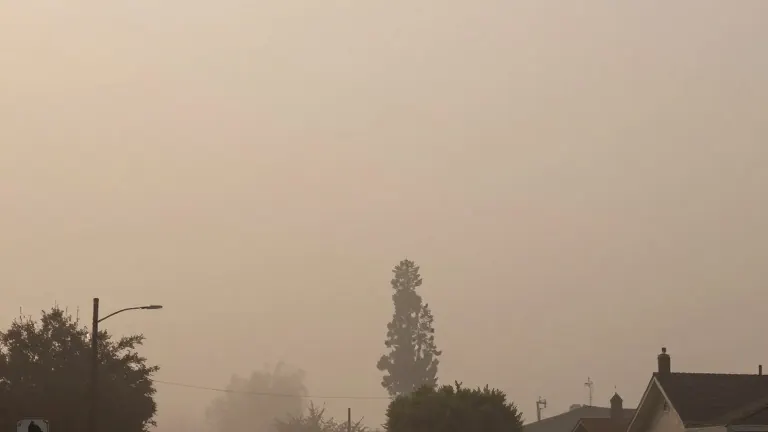
At the peak of the 2025 Los Angeles fires, about 7 million people breathed air with lead levels more than 80 times higher than normal for a 24-hour stretch, according to a study published Wednesday in Science Advances.
Researchers at the California Institute of Technology tracked the chemical makeup of the Eaton Fire plume and compared it to smoke from a 2024 Riverside County fire that burned mostly brush. The urban plume carried 50 times more lead, three times more arsenic, and seven times more halogens. Halogens include chlorine and bromine. "The main, key finding is really that wildfire smoke is very different fundamentally from the urban smoke," said Nga Lee "Sally" Ng, a study author. The instruments used in the work can "actually see the very detailed component of these particles that we are breathing."
The fires in Altadena and Pacific Palisades started on Jan. 7, 2025, and burned for days. They killed at least 31 people and destroyed more than 16,000 structures. Cars, paint, furniture, and household chemicals went up with the buildings. Ed Avol, a professor emeritus at the Keck School of Medicine at the University of Southern California, said heavy metal exposure at this scale fits what he would expect, "but certainly surprising because we haven't been able to document this sort of thing." Avol did not take part in the study. He said the hour-by-hour readings from the monitoring network stand out, since most air sampling happens "a couple of times a week, at best."
The team relied on ASCENT, a U.S. network of air monitors that reports the size and chemical makeup of fine particulate matter in real time. Ng said it is the first U.S. network able to do that. The instruments logged readings every hour during the fires. That let researchers watch the smoke change over the course of the blaze and pick out what came from burning structures. From there, they estimated how many people in Los Angeles breathed the metals, lead in particular.
Lead is a neurotoxin. It can slow development in children, lower IQ scores, and raise blood pressure in adults. Scientists still do not know how short bursts of high exposure affect people. Arsenic exposure is tied to several cancers.
Yaguang Wei, an assistant professor of environmental medicine at the Icahn School of Medicine at Mount Sinai, said the findings line up with work he has done on wildfire smoke. "I think their findings are not surprising," said Wei, who did not take part in the study. When fires consume buildings, he said, they burn "a lot of lead on your wall paint and the plastics and electronics and those are very toxic."
Wei said governments should put more money into wildfire monitoring, public alerts, and prescribed burns. Avol said the report shows where cities and wildlands meet, and where they catch fire. "It reminds us to be cautious and be concerned and, you know, think about what we can do to minimize this. We're not going to stop using all these materials containing metals and halogens and so forth in our homes," he said. "How do we protect people from being exposed to that?"
More News · Las Vegas news · Report a business · Got a Story?