Local drivers face brake pad wear
Common driving habits and maintenance oversights shorten the lifespan of braking components in the region.
By Vincent Parker ·
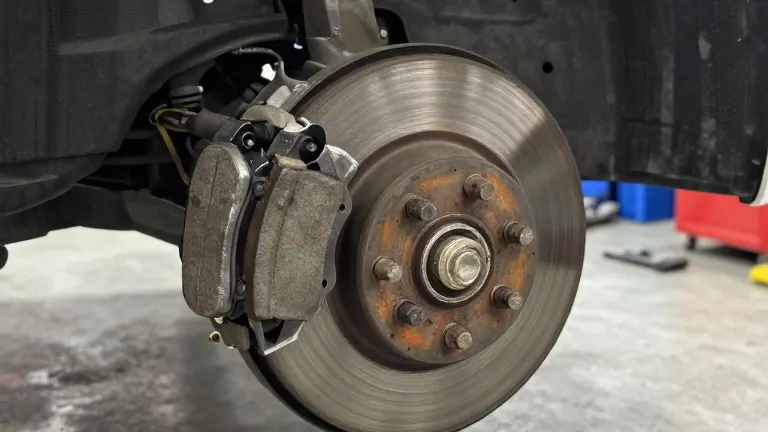
Brake pads in Clark County vehicles often wear out faster than expected due to specific driving habits and maintenance choices.
The friction components do not fail at a uniform rate. Instead, external factors accelerate the degradation of the material against the rotors. Local drivers can extend the life of these parts by adjusting how they operate their vehicles and maintaining the hardware correctly.
Choosing the wrong material for the vehicle is a primary cause of early failure. Ceramic and semi-metallic pads behave differently under identical conditions. Ceramic options generally produce less dust and operate quietly. Semi-metallic pads often perform better under demanding braking conditions. Drivers should consult their owner’s manual or a qualified technician to select pads that meet the vehicle’s specific requirements rather than assuming any compatible option will work the same way.
Resting a foot on the brake pedal creates constant friction. This habit keeps the pads in contact with the rotors even when the car is not slowing down. The resulting heat damages the friction surfaces over time. Downhill driving presents a similar challenge in the state’s mountainous areas. Holding the brake pedal continuously generates substantial heat. Drivers should select a lower gear to use engine braking for speed control while using the brakes only when necessary.
Aggressive braking places extra thermal stress on the friction material. Waiting until the last moment to slow down creates more heat than gradual deceleration. Maintaining a safe following distance allows for smoother stops. Sticking brake calipers also contribute to uneven wear. A caliper that does not release properly causes the pads to drag against the rotors while driving. This creates heat and wears down the material much faster than normal. Warning signs include the vehicle pulling to one side, a wheel becoming unusually hot, or a burning smell near a wheel.
Corroded or seized slide pins can restrict caliper movement during service. A technician should inspect these components for corrosion or restricted movement during brake service. Installing new pads on damaged rotors is another common error. Deep grooves on the rotor surface can interfere with proper contact. A technician can measure rotor thickness to determine if resurfacing or replacement is needed based on manufacturer specifications.
Carrying unnecessary vehicle weight increases the energy brakes must manage. This is particularly relevant when transporting recreational equipment through Nevada. Drivers should check load ratings and allow more stopping distance when carrying heavy loads. Delaying brake inspections allows underlying problems to go unnoticed. Regular inspections can catch uneven wear before it causes further damage. Drivers should not rely solely on squealing sounds to identify issues, as some problems develop without noticeable noise.
Addressing these issues early prevents damage to other components. Small changes in driving habits can reduce unnecessary wear on the braking system.
More News · Las Vegas news · Report a business · Got a Story?