Midterm shifts reshape 2028 presidential strategy map
Party leaders in Washington are redrawing electoral targets and launching exploratory committees as the competitive battleground expands beyond traditional strongholds.
By Vincent Parker ·
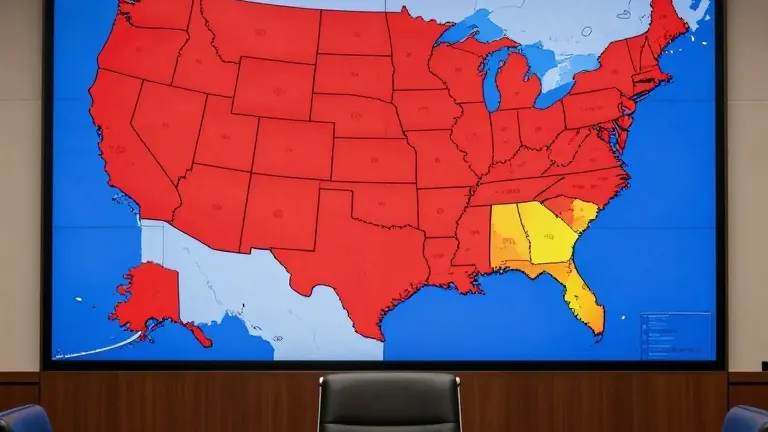
Democratic and Republican officials in Washington began reshaping their strategies for the 2028 presidential election on Thursday, following midterm results that flipped seats in red strongholds from rural Kansas to the suburbs of Atlanta. The outcome has altered the electoral map, forcing both parties to reconsider which states they can defend and where they must spend money.
Alex Keyssar, a professor at the Harvard Kennedy School, noted that the number of states Republicans consider secure has diminished. He explained that this shift means Democrats can now compete in more states, including Texas and Georgia, which were previously viewed as long-safe Republican territory.
Party leaders moved quickly to establish their footing. On Thursday, allies of Rep. Ro Khanna of Fremont, California, launched a fundraising committee for his potential candidacy. Meanwhile, Gov. Gavin Newsom of California commuted the death sentences of all prisoners on the state’s death row as he considers a run for president. Illinois Gov. JB Pritzker released a road map with recommendations for the new Congress earlier this week.
Senate Minority Leader Chuck Schumer told an audience at the Center for American Progress on Wednesday that Democrats must solidify their position in states they won during the 2026 midterms. He stated that the party needs to build infrastructure in those areas and continue expanding the map into new states in 2027.
Republican leaders responded to the midterm losses with urgent assessments of their party's direction. Vice President JD Vance blamed the sweeping defeats on President Trump’s war in Iran. Sen. Ted Cruz of Texas, where the party faced a historic blue wave, faulted the GOP for ignoring voter economic pain. Gov. Ron DeSantis of Florida, who held his state’s line, called the midterms an extinction level event for Republicans that will last beyond 2028.
Matt Gorman, a Republican strategist who worked for the National Republican Congressional Committee, said the lack of positive momentum allows the party to begin rebuilding conversations from a bottoming out point. He argued that the 2028 nominee will have to create their own voter coalition rather than relying solely on President Trump’s base.
Keneshia Grant, a political scientist at Howard University, advised Democrats to invest heavily in the coastal South. She pointed to unexpectedly close Senate races in Florida and Mississippi as evidence that the party must recognize the moment and meet it with new calculations.
President Trump declined to endorse a successor on Wednesday, saying it is too early to make the call. He praised both Vice President JD Vance and Secretary of State Marco Rubio while noting he does not know who will ultimately run for the nomination.
Democratic leaders in Congress plan to make affordability a centerpiece of their legislative agenda as they take control of both chambers next year. Rep. Maxwell Frost of Florida told reporters on Wednesday that the party has won immense political power and now must deliver tangible results to keep it. Strategist Rob Flaherty emphasized that whoever runs in 2028 must focus on quick delivery and change that voters can substantively feel.
Sen. Ruben Gallego of Arizona, who has not ruled out a presidential run, said on Thursday that some states may now be more swing-ish. He noted that candidates who can answer voters’ top issues authentically will be the more successful ones, regardless of the shifting electoral landscape.
More Politics · Las Vegas news · Report a business · Got a Story?