Poll: 63% of California Voters Fear Federal Halt to Counting
A UC Berkeley survey reveals deep partisan divides over Justice Department actions and ballot measure complexity ahead of Tuesday's election.
By Rosa Fuentes ·
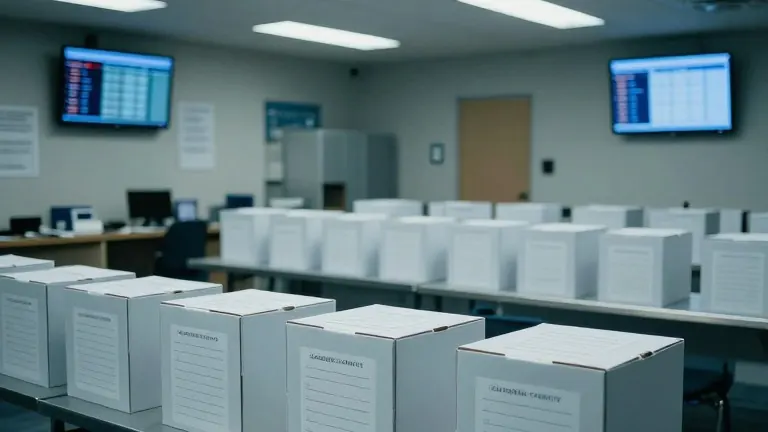
The anxiety among California voters regarding the upcoming federal intervention in state elections reached a peak this week, according to a new survey. The data indicates that nearly two-thirds of registered voters are concerned that the Trump administration may attempt to stop the counting of votes shortly after the midterm election. This finding comes from the UC Berkeley Institute of Governmental Studies, which co-sponsored the research with The Los Angeles Times.
The concern is sharply divided by party affiliation. Among Democrats, 85 percent believe the vote count could be stopped, a figure that stands in stark contrast to the 22 percent of Republicans who share that worry. The survey also found that 49 percent of voters are not confident that the state’s election will remain free of federal interference. Matt Barreto, director of the UCLA Voting Rights Project, stated that these combined threats should raise alarms for democracy in California.
The federal government has recently escalated its legal challenges to California’s voting processes. The Department of Justice filed a lawsuit requesting that the state set aside approximately 20,000 ballots flagged as potentially from noncitizens. Federal prosecutors have threatened criminal actions against elections officials who refuse to comply. On Monday, the administration took its case to the Supreme Court, which rejected the request to set aside the ballots. Just before that ruling, Governor Gavin Newsom sent a letter to U.S. District Court judges in California. He urged them not to comply with search warrants to seize ballot materials before results are certified, citing grave concerns about federal agents.
Voters also expressed frustration with the state’s own ballot measures. This year’s election features 14 statewide propositions, including new taxes on billionaires and funding for cancer research. Unlike the federal interference issue, the dissatisfaction with these measures was shared across partisan lines. According to the poll, 82 percent of likely voters agreed that the wording of the propositions made them hard to understand. The same percentage believed that special interest groups have too much influence over which propositions appear on the ballot. Additionally, 62 percent of likely voters felt there were too many propositions on the ballot.
The poll surveyed 2,787 registered voters in California from Oct. 19 to 25. The survey was conducted in both English and Spanish. The overall estimated margin of error is plus or minus 2.5 percentage points. Among likely voters, the estimated margin of error is about 3 percentage points in either direction. Fears of federal meddling were slightly higher among voters of color, with 64 percent of Black voters and 54 percent of Latino voters expressing a lack of confidence in the election’s integrity. This compares to 44 percent of white non-Hispanic voters.
Eric Schickler, co-director of the UC Berkeley Institute of Governmental Studies, described the current level of alarm as without precedent. He noted that the last time the United States saw such extreme polarization paired with claims of illegitimacy was during the Reconstruction era. Schickler said that both parties are distrustful of different aspects of the process. Republicans are focused on allegations of fraudulent voting, while Democrats fear the federal government may attempt to overturn results. He noted that current polling data does not indicate that a Democratic path to victory in the U.S. House of Representatives will rely on California voters.
The Trump administration has previously criticized California for being one of the slowest states to finish tabulating results. This delay is attributed to the state's large population and high number of mail-in ballots. Votes processed after election day in California typically contain a higher proportion of Democratic ballots. The survey results highlight a distinct disconnect between the legal battles in federal courts and the public's perception of those battles on the eve of the election.
More Politics · Las Vegas news · Report a business · Got a Story?