Trump appoints Stephen Miller as White House chief of staff following midterm losses
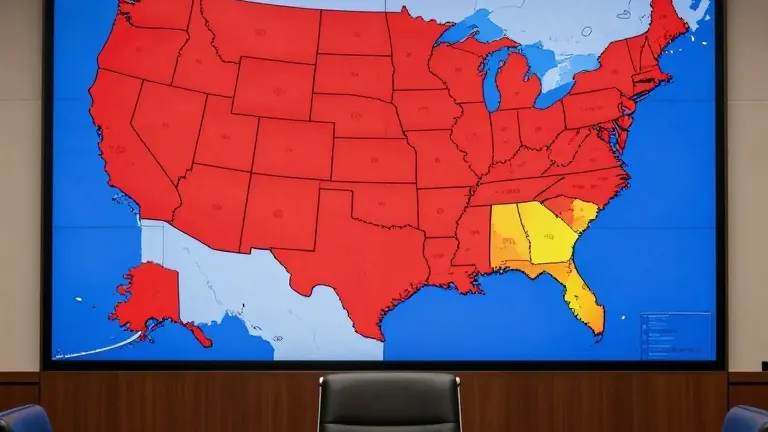
The move replaces Susie Wiles, who served in the role for the entirety of the president's second term, and comes days after Republicans ceded control of Congress.
By Mariam Saleh ·
President Donald Trump announced on Friday that Stephen Miller is taking over as White House chief of staff. The decision was made just days after Republicans suffered a defeat in the midterm elections on Tuesday, resulting in the loss of their congressional majority. Trump posted the news on his social media platform, where he also thanked the outgoing chief of staff for her service and noted that she would remain active within his political organization.
Susie Wiles, who is 69, held the position for the full duration of the president's current term. She was the first woman to serve as White House chief of staff. Her tenure ended shortly after she announced in September that her pathology results showed no evidence of breast cancer, a diagnosis she made public in March of this year. Wiles had managed the president's 2024 presidential campaign, a role she also performed for his 2020 bid.
Miller, a longtime adviser to the president, currently serves as deputy chief of staff. He joined the presidential team as a speechwriter during the 2016 campaign. He is widely recognized for his role in shaping the administration's strict immigration policies. Before joining the Trump orbit, Miller worked for former Senator Jeff Sessions of Alabama, who served as the first attorney general in Trump's initial term.
Wiles was known for bringing discipline to the chaotic style often associated with the White House. She avoided public attention, a trait that led Trump to call her the "ice maiden." In an October 2026 event at the White House, the president described her as a "tremendous fighter" following her cancer diagnosis. In a rare interview with Fox News Digital that same month, Wiles explained that her doctor convinced her to undergo a mammogram earlier than scheduled, which led to the early detection of her disease.
The change in leadership follows a period of public candor from Wiles. In December 2025, Vanity Fair published interviews with her and other senior officials conducted by author Chris Whipple. Wiles described the president as having an "alcoholic's personality," even though he does not drink. She also stated that Vice President JD Vance had been a "conspiracy theorist for about a decade" and that then-Attorney General Pam Bondi had "whiffed" in her handling of the Jeffrey Epstein files. Wiles defended the interview but criticized the publication's framing.
This is not the first time the president has cycled through multiple chiefs of staff. During his first term, he dismissed four individuals: Reince Priebus served six months, John Kelly served 17 months, Mick Mulvaney served in an acting capacity for just over a year, and Mark Meadows served for the final ten months of the term. Wiles was the longest-serving chief of staff in the president's history, surpassing all four of those predecessors.
Miller's promotion places a key architect of the administration's immigration agenda in the most powerful advisory role in the executive branch. Trump praised Wiles in his announcement, stating that she would continue to work for his political organization. Wiles released her own social media statement shortly after the announcement, calling her time in the White House "the honor of a lifetime." She listed accomplishments such as securing the border and cutting taxes, and affirmed that her commitment to the president and the mission would not change.
The transition is effective immediately, with Miller assuming the duties of the chief of staff while the new congressional session begins. The timing of the appointment, occurring in the immediate aftermath of the midterm election results, signals a shift in the administration's leadership structure as it faces a divided government.