
Trump's Russian Diesel Deal Faces Backlash as Prices Climb
A 5 million ton import pact aims to lower U.S. diesel costs, but experts question its scale amid a 67 percent price spike.
By Nathaniel Hayes ·
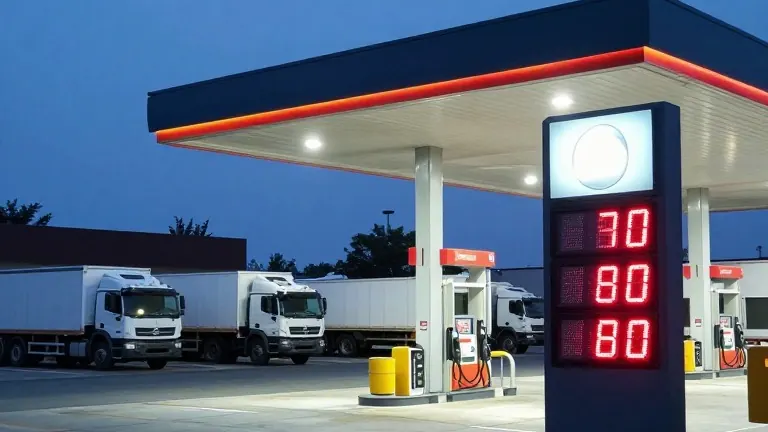
Average diesel prices in the United States jumped 67 percent between late February and October 26, according to the U.S. Energy Information Administration. This surge outpaced the 41 percent rise in regular gasoline during the same period. President Donald Trump announced a plan on October 9 to import nearly 5 million tons of Russian diesel to address the rising costs. He claimed on social media that diesel prices would come down "IN RECORD NUMBERS, AND FAST!" However, the average price per gallon rose from $6.20 the week before the announcement to $6.35 in the week ending last week.
The spike in diesel costs has placed pressure on manufacturing, agriculture, and transportation sectors. Mark Zandi, chief economist at Moody's, noted to CNBC that while cars run on gas, the economy runs on diesel. Trump attributed the price increase to Ukrainian attacks on Russian refineries. However, the rise began following the start of the Iran war in February, which restricted crude oil shipments through the Strait of Hormuz.
Energy consultant Robert McCullough based in Portland, Oregon, questioned the scale of the import deal. He stated in a recent note that 4.8 million tonnes of diesel "sounds large and would impress a naive audience." The global diesel market consumes approximately 1.4 billion tonnes annually. The Russian deal covers about 30 hours of global consumption. Since the U.S. consumes roughly 2.94 million barrels daily and already exports about 200,000 metric tons per day, McCullough compared shipping diesel to the U.S. to "carrying coals to Newcastle."
Goldman Sachs estimates that the first Russian shipments may lower U.S. diesel prices by only two to five cents per gallon. This potential reduction is minor compared to the $2.65 increase consumers have seen over the past year. The deal involves suspending U.S. sanctions on Russian diesel until early April 2027. According to Trump's description, Russia will deliver over 300,000 tons immediately, 500,000 tons by the end of November, and the remaining 3.2 million tons in subsequent stages. The timing for deliveries after November remains unclear.
Sergey Vakulenko of the Carnegie Russia Eurasia Center estimates the deal could provide Russia with tens of millions of dollars per month. He described the revenue as "small fry for Russia" but noted it relieves economic stress from sanctions. Stephen Sestanovich, a senior fellow at the Council on Foreign Relations, said the deal shocked Ukrainian and European governments. He argued it showed the U.S. willing to dismantle sanctions unilaterally, even when violating its own laws.
The waiver of sanctions appears to conflict with the Lindsey O. Graham Sanctioning Russia and Iran Act of 2026, which Trump signed into law on September 18. Mary Kate Godfrey of the CFR explained that lifting the oil ban requires certification of a ceasefire and Russian troop withdrawal, neither of which has occurred. The deal has drawn criticism from members of Congress across party lines.
Six Republican and six Democratic senators wrote to Trump on October 13. They stated the deal provides Putin with fuel to finance his war machine and enables continued attacks on Ukrainian civilians. They called the agreement a gift to an adversary and a betrayal of allies, urging that it be rescinded.
Trump's energy policy includes other initiatives aimed at lowering costs, such as reviving coal mining and opposing wind power. He declared on April 8 that he was ending Biden's war on coal. The administration has also spent over $2 billion to halt commercial wind projects. Critics argue these measures have not lowered prices. The next scheduled milestone for the Russian diesel deal is the delivery of 500,000 tons by the end of November.
More Business · Las Vegas news · Unethical Practices · Report a business · Got a Story?