USDA allocates $15 billion in aid to farmers ahead of midterms
The package includes an $8 billion diesel subsidy and $5 billion in loans to offset rising input costs and tariff impacts.
By Rosa Fuentes ·
The Trump administration has committed $15 billion in financial support to U.S. agricultural producers in the weeks leading up to the midterm elections. The package is designed to mitigate the impact of higher diesel and fertilizer costs that have burdened farmers due to recent tariffs and the ongoing war in Iran.
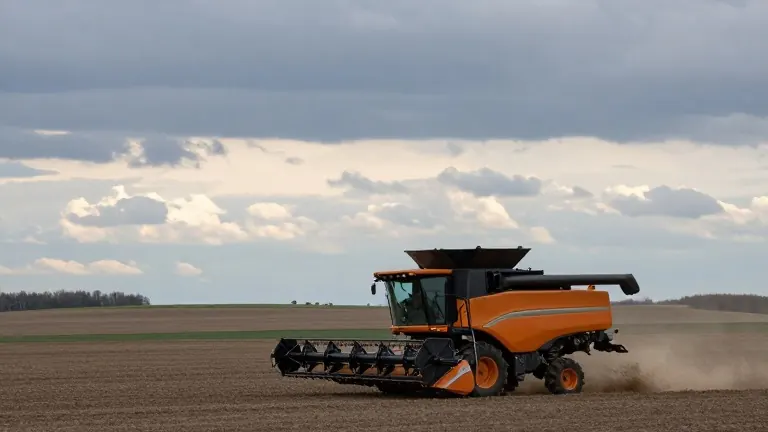
More than half of the total allocation will go toward an $8 billion one-time payment plan for farmers dealing with soaring fuel prices. The Department of Agriculture announced it will release specific details about these payments this month, although the exact timing for when funds reach producers remains undetermined. Diesel is a critical operational expense for trucks, tractors, and combines used in harvest cycles.
The remaining funds are distributed across several specific initiatives. At least $5 billion is designated for guaranteed loans targeting ranchers and fishermen. An additional $1.8 billion is reserved for producers and landowners who have participated in conservation programs. Smaller allocations include $573 million for fertilizer manufacturing projects, $57 million for expanding meat processors, and $86.6 million in grants for innovative specialty crop projects. On Thursday, the agency also announced it would purchase up to $472.5 million in agricultural commodities to support producers and fund charitable programs.
These payments are primarily sourced from the USDA and do not require immediate congressional approval to proceed. The agency is also implementing non-monetary measures, including expanding sales of off-road diesel, improving data transparency for cattle sales, and strengthening wolf management policies to protect livestock.
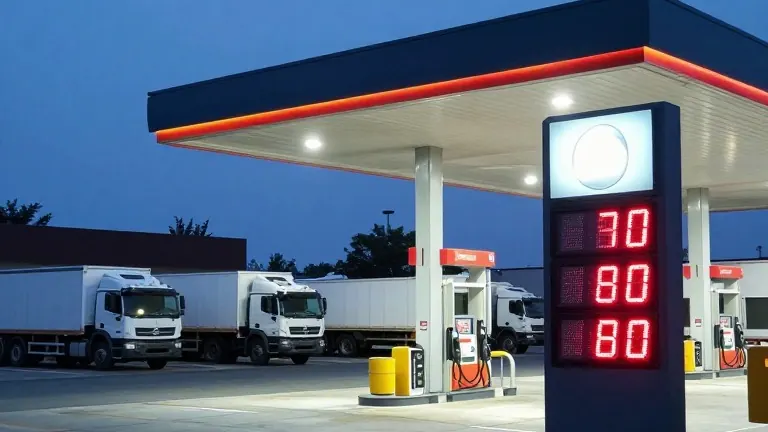
The financial aid comes as farmers face a difficult operating environment. Fertilizer and fuel costs have made it challenging to maintain profit margins this year. Last year, tariffs increased equipment expenses, while a trade war with China led to a near boycott of U.S. agricultural goods. According to motor club AAA, diesel averaged $6.32 per gallon on Friday. While this is slightly down from its September peak, it is 70% higher than the price one year ago. This price difference means filling a 100-gallon tank now costs $260 more than it did in the same period last year.
Gregg Ibendahl, a farm management specialist at Kansas State University, stated that the estimated payments should more than cover the increase in fuel costs. He noted that the funds could also help offset high fertilizer prices. However, he warned that these ad hoc payments do not address the underlying structural issues driving up prices. Ibendahl pointed out the difficulty farmers face when explaining to lenders that their current financial stability relies on temporary government assistance rather than long-term business health.
Alexandra Middlewood, an associate professor of political science at Wichita State University, reported mixed reactions from farmers. Many are relieved their businesses will survive this year, but others view the programs as one-time bailouts rather than sustainable solutions. Middlewood noted that cost of living and access to health care remain top issues for rural voters, with some perceiving the administration as not doing enough to address these concerns despite claims of a booming economy.
Michael Smith, a political science professor at Emporia State University, observed that while many rural voters support President Trump personally, some of his policies have hurt the agricultural industry. Issues such as immigrant deportations threatening the labor force and cuts to foreign aid and SNAP benefits have impacted the market for agricultural products. Smith noted that while Trump is not on the ballot this year, his policies are effectively being judged by voters.
Middlewood, based in Kansas, does not expect frustrated rural voters to shift to the Democratic Party given the state's history as a Republican stronghold. She suggested that some voters may choose to sit out the election or vote independent. She emphasized that independent voters often decide close races, making their choice a critical factor in this year's outcome.
The administration has increased its attention to rural areas, with President Trump visiting Iowa and Kansas on Sunday, two days before the election. The $13.8 billion in safety net program payments for the 2025 crop year for eligible producers growing corn, soybeans, wheat, and rice is separate from the new $15 billion package.
More Business · Las Vegas news · Unethical Practices · Report a business · Got a Story?